Defending the Micra

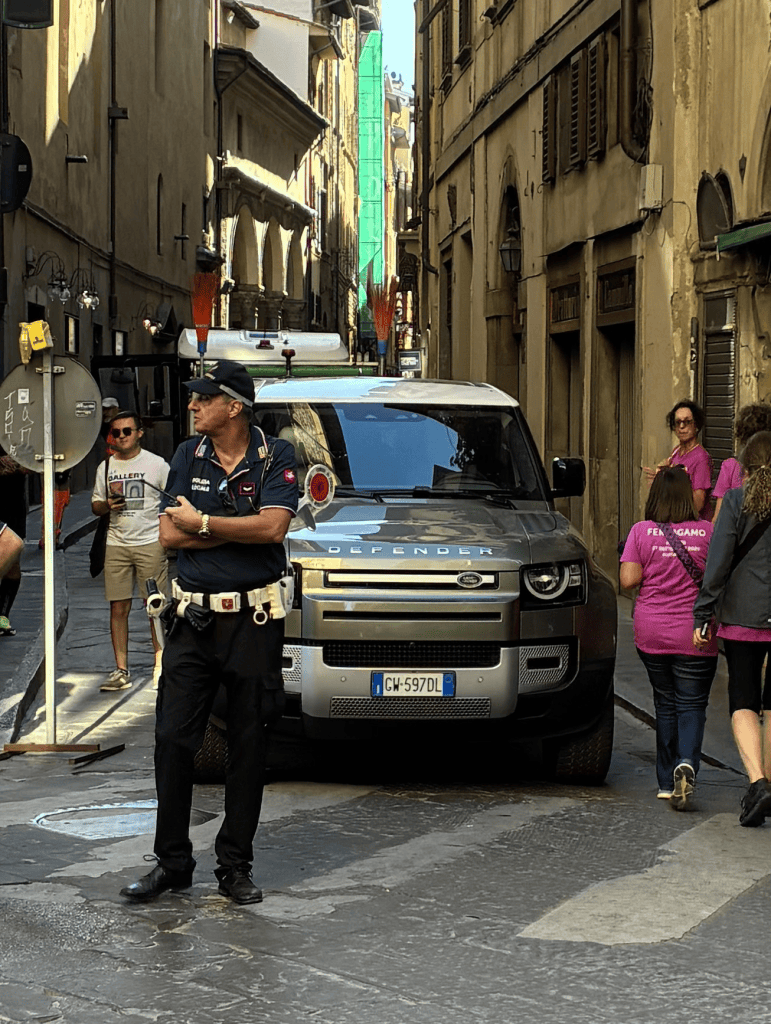
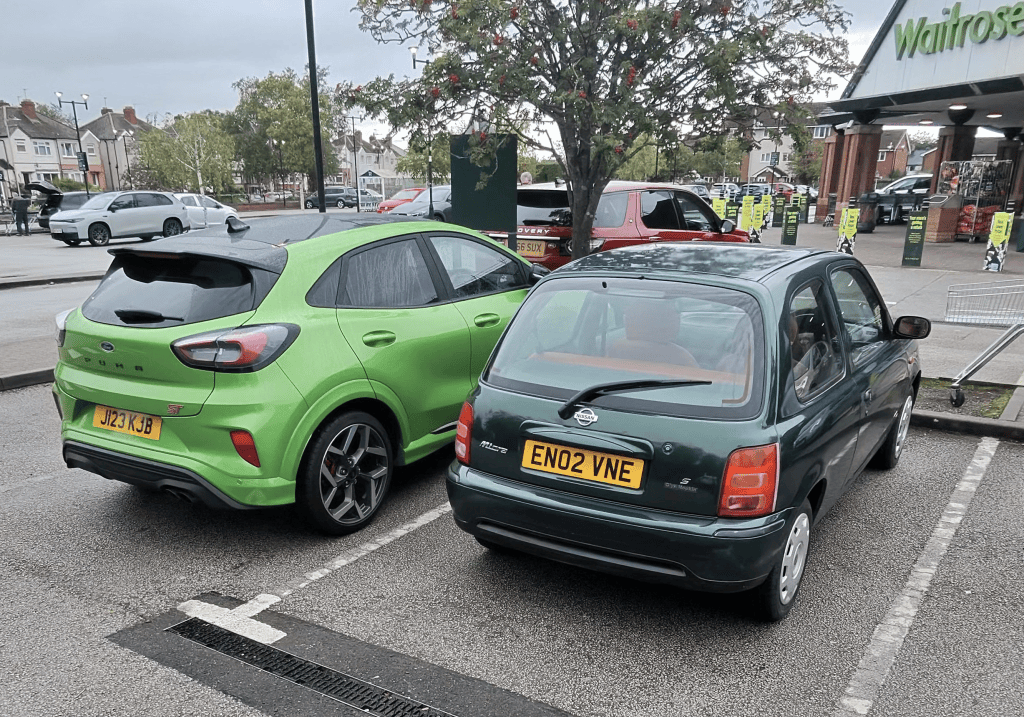
On pulling into my local Waitrose, I couldn’t help but park the little Micra next to this gargantuan Defender, knowing it would make for a good photo. Yes – it was cheeky.

We shouldn’t really compare them. Different cars, different jobs. I’m not going to cruise down to Surrey for work in the Micra, nor tackle snow-covered Alpine hairpins on a ski trip. But for nipping down to the shops.. which is exactly what’s pictured here.. it does the job more than nicely. Even with today’s Shropshire potholes, as long as you keep your eyes peeled and steer around them.

I like it that both cars were built by different generations of British car workers. The Micra up in Sunderland some 25 years ago; the Defender in Solihull just last year. Two factories, different eras, different design philosophies.

Two different shades of green also.. my favourite car colour. Perhaps the Micra wins that one, with its warmer, friendlier hue. The orange interior helps too. Mind you, the Defender may well have something equally playful inside.. if only we could see it through all that privacy glass.

Footnote: A sharp-eyed reader has pointed out that these modern Defenders are built overseas. Which raises an interesting question: is a Japanese-branded, UK-built Micra more British than a Land Rover made in Slovakia? I’ll leave that one with you.

Pub Names as Footnotes to History

Wandering the streets of Birmingham today, this magnificent pub building caught my eye. Then the name – The Old Contemptibles – made me smile.

We British have long used pub names to tell the story of our social history, quietly preserving things that matter. Sometimes confusingly so, until you dig a little.

I often stop in Ripley, Surrey – a landlocked village – where three of the pubs have distinctly nautical names: The Ship, The Anchor and The Jovial Sailor. Odd, until you realise Ripley sits on the old London–Portsmouth road, once well travelled by Royal Navy officers and sailors moving between the Admiralty in London and their ships.

In today’s case, The Old Contemptibles refers to the derogatory name given by Kaiser Wilhelm to the British Expeditionary Force in 1914.. a label the men themselves were only too happy to adopt as a badge of honour.

A badge long-since preserved in Edmund Street, Birmingham. Lovely.

When Certainty Slips..

A good reminder of why sport rewards attention.

Within the space of half an hour, two very different stories played out. First, a real high point for Team GB, with Matt Weston taking Britain’s first medal of the Winter Olympics Games after a dominant performance in the downhill tea tray. (skeleton.)

Then, a sharp contrast on the ice. Figure skating favourite Ilia Malinin, unbeaten for an age and widely expected to take gold, fell twice and finished outside the medals.

It wasn’t a lack of talent or preparation.. just one of those moments sport occasionally delivers when it reminds us once again that there are no certainties in life.

And that’s what makes it so compelling.

Brand, Blue and a Copper Top

You don’t need to be a Williams Racing fan like me to be quietly purring over their 2026 livery.

Hard brief.. done well.

This is never a case of saying “make it look nice, Dave” to whoever leads the design team. There are some serious constraints at play. Principally, Williams’ natural colour.. that dark, confident blue.. and how it can be made to work with a set of heavyweight sponsors who didn’t arrive because their brand guidelines conveniently matched… though it certainly helps when they do.

Start with the title sponsor, Atlassian. Fortunately, their logo is either white on blue or blue on white. A perfect fit. No gymnastics required. Phew.

Next up, Komatsu. Yes, their heavy machines are famously yellow.. but the corporate logo? Blue on white, or white on blue. Once again, harmony. Once again, crisis averted.

Then there’s The Duracell Company. No blue-and-white sympathy here at all. And yet… what a stroke of design genius. Instead of forcing the logo to behave, Williams turned the airbox into an actual battery.. black casing, copper top, unmistakable. One of those ideas that’s so obvious after you’ve seen it that you wonder why nobody did it decades ago. Hats off.

Finally, the newcomer: Barclays. Their Spanish blue is noticeably lighter than the Williams shades of recent seasons. I’ll admit it jarred at first. But it’s growing on me. Correction.. it’s grown. It adds lift, contrast and a modern freshness without overpowering the car’s identity.

The result? A livery that feels coherent, confident, and quietly clever. Williams have integrated their key sponsors rather than simply accommodating them.. and I’d wager those sponsors are very happy indeed.

Now comes the hard part: taking it to the track… and keeping them that way.

Lovely to Have It Back

This morning I brought home my much-loved Range Rover from an unplanned winter holiday at the garage.

Deeply satisfying. Anxiety-busting, too.

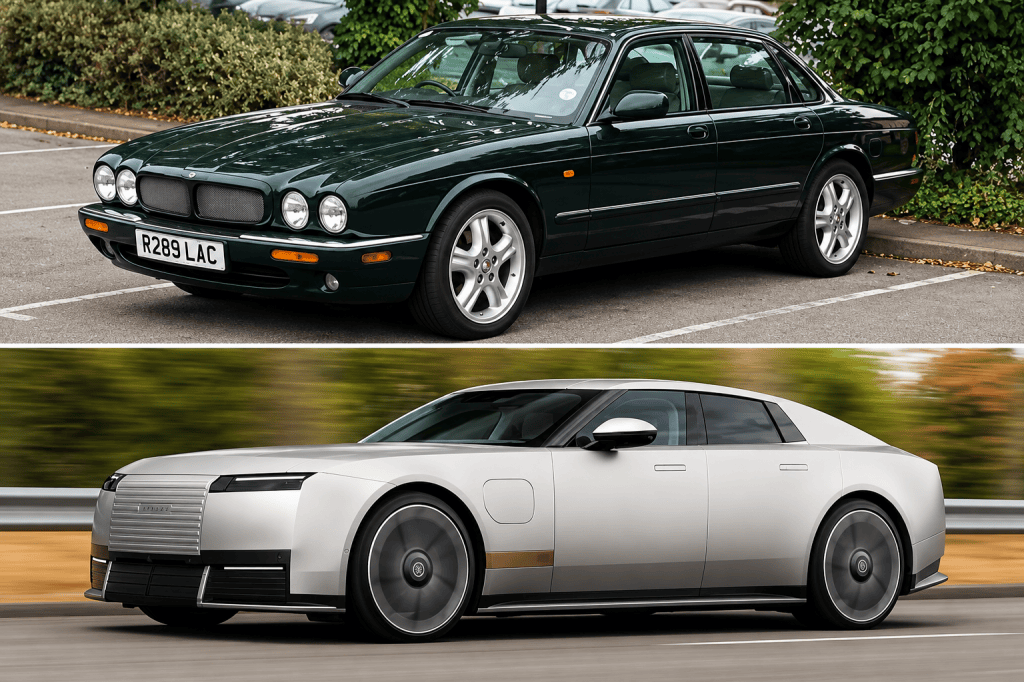
I alternate between two modern classics (ok… old cars) to get me down to Surrey for work. When one of them is down, I feel vulnerable. I am vulnerable. Because a couple of times a year I’ll get in one car and an “issue” means I have to swap over. A blown headlamp bulb on the Jaguar, for example. No time to fix it at 4:30am… only a minor inconvenience when the other car is there. A crisis when it isn’t.

When the Range Rover needed recovering from Surrey back to my Shropshire Land Rover specialist, I assumed the worst. A transmission warning light had bothered me twice in recent weeks. Cleared each time with a classic “turn it off and on again”… but still a niggle. I was braced for a gearbox. Turned out to be blocked fuel injectors. Still a chunky repair… but not gearbox territory.

If you run ageing vehicles, you reconcile yourself to them going wrong. Just as long as they don’t go wrong at the same time.

Cars cost money. You either buy expensive ones and move them on before they start going wrong – losing serious money in depreciation. Or you buy old ones “cheap” and then invest in extending their life when things break. I’m firmly in the second camp… but it’s a constant judgement call.

Let’s be honest. My only way into Range Rover ownership is buying an old one.

And I keep going to the window to look at it on the drive. Ridiculous behaviour for a grown-up. I was like this at ten years old with my first racing bike. That sleek Raleigh would have slept in my bedroom if Mum hadn’t feared oil on the carpet.

You don’t realise how attached you are to a car until it’s been unwell and off the road for a bit.

Lovely to have it back.

A Trend Worth Backing

I love the aesthetic of this old village garage in Hodnet, Shropshire.

Still pumping fuel and servicing cars in 2026.

You can almost picture the owner of this cottage, a century ago, noticing more and more horseless carriages rattling through the village and thinking:
This feels like a trend worth backing.

One hundred years later, it’s still here.. quietly doing its job.

Not all good businesses start with a grand vision.
Some just start with paying attention.

Some of the Best Adverts Have Wings

Are these racing cars, or complex adverts with wings and a wheel on each corner?

The answer is: both.

And for romantics like me, they’re also mechanical works of art and examples of iconic visual design.

Four of my all-time favourite Williams Racing liveries are pictured here.

With the 2026 reveal just days away, I’m curious to see if a new favourite is about to arrive.

Let’s see.

Flat White or F*ck Off

There’s a coffee pop-up in London tomorrow (28 January) called Flat White or F*ck Off.

They only sell one thing: flat whites.
And if you don’t want one of those… well, yes, you’ve guessed it.

The idea originated with marketing/ad guru Rory Sutherland – a frequent rail user – who was fed up with getting stuck behind someone ordering an elaborate iced concoction when he’s got a train to catch.

Now Tom Noble and Charlie Hurst are making the idea happen for real.

On the face of it, it’s a cheeky stunt. But underneath, it’s a neat real-world experiment in something I think more businesses should think about:

Confident specialisation.

Knowing what you’re great at.
Saying no to the rest.
Letting customers self-select.

In a world of endless options, there’s something refreshing about a business that takes a clear point of view.

Not just in coffee. In any industry. And I’m personally drawn to it.

A worthy endeavour.. even if I’ll get my flat white somewhere a bit more permanent.

(Who am I kidding… I’d definitely give Flat White or F*ck Off a try if I was passing!)